
Article · Brandon Warrell
How to choose a graphic designer: what to look for in a portfolio
Choose a graphic designer by checking whether the portfolio shows work like yours, whether each piece is honestly labeled, and whether you can see how the designer thinks and revises. Then talk to one or two people about files, revision rounds and rights. If you still need more evidence, pay for a small job instead of asking for free samples.
How do you choose a graphic designer?
Judge the portfolio on four things: fit, labels, process and print details. Then ask your questions on a first call.
This checklist assumes you've already decided a single designer suits the job. If you haven't, start with freelance designer vs agency vs DIY.
I use my own portfolio as the worked example below. It's mostly coursework from State College of Florida (SCF), plus a design test and older high-school pieces, and the school work, tests and mockups are labeled. It isn't a client list, and you should weigh it that way.
Does the portfolio show work like yours?
Start with the project type. A designer with strong posters may not have shown any packaging, and a strong logo set says little about a long book layout. Look for pieces close to what you need, in the same format and with a similar amount of text.
Taste matters, but it comes second. A style you love won't help if the designer hasn't shown the format you're buying.
If nothing matches, ask which piece is closest and why. Listen for what carries over to your job, such as the amount of text or the print format.
Is each piece labeled as client work, coursework or spec work?
Those three kinds of work tell you different things. Client work was made for a real customer with real limits. Coursework was made for a class, usually against an assignment and a critique. Spec work is made before anyone has hired the designer to make it.
None of those is bad on its own. The problem is a portfolio that lets you assume. A poster for a famous organization looks like a commission until a label says otherwise.
Here is how labels read in my portfolio:
- By course and term: "Photoshop · SCF · Spring 2025" and "Typography · SCF · Fall 2025."
- Older work: "High school photography · 2019."
- A design test: "Design test for a graphic design role · spec work · May 2026."
- Mockups: "Mockup: the cover as a vinyl sleeve."
- Logos that aren't mine: "Class project, not commissioned by either organization," on a poster set using the International Rhino Foundation and Habitat for Humanity logos.
My site footer says it in one line: "School work, tests and mockups are labeled." I also filmed and edited two paid real-estate videos in 2020, and they're listed under the heading "Paid freelance."
If a portfolio has no labels, ask: "Was this for a paying client, a class or a test?"
Do the case studies show the brief and the revisions?
A finished image shows the result. A case study shows the decisions behind it. Look for three things.
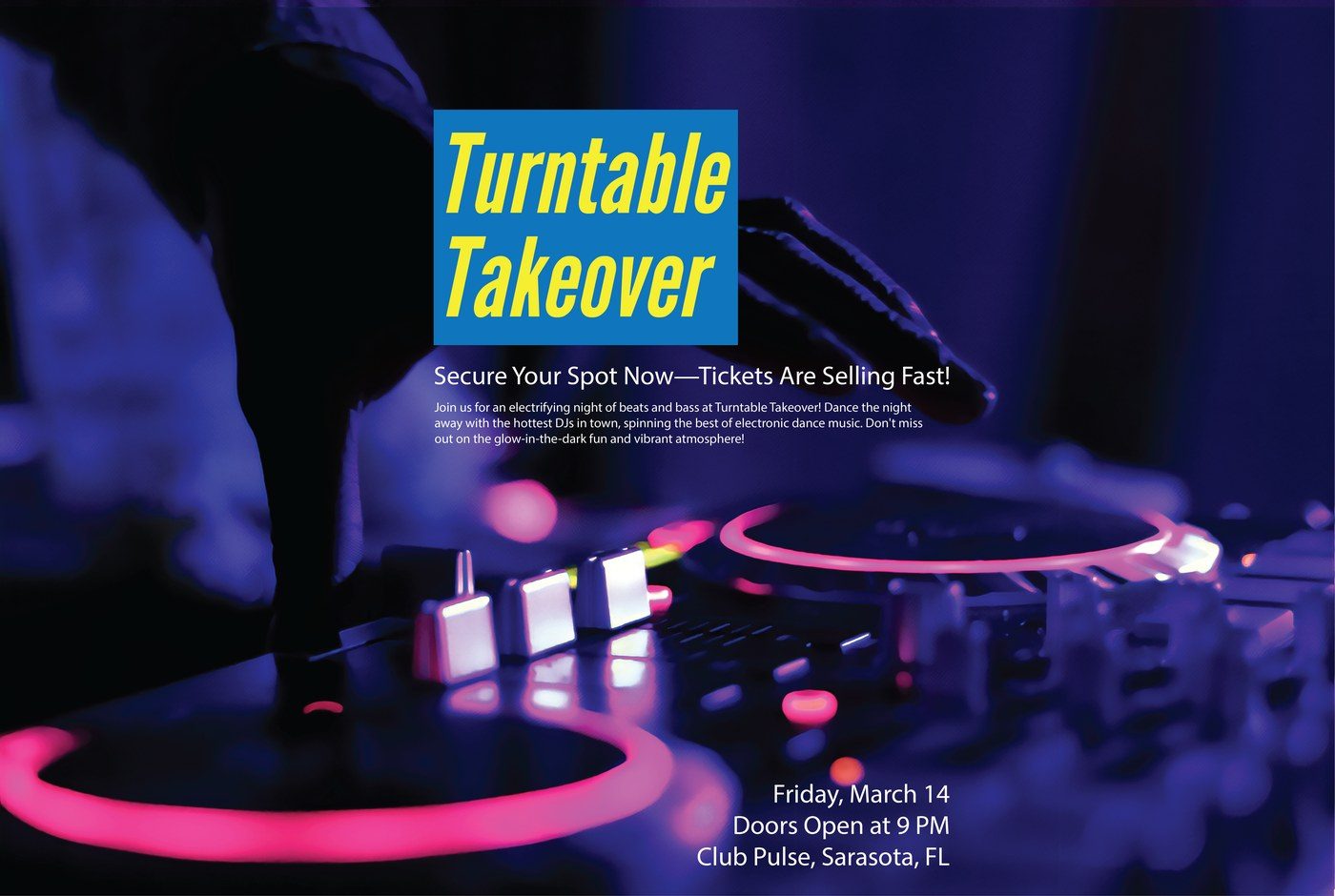
The brief. What was the piece supposed to do? One of my case studies opens with "The brief was a raster text effect built over my own photography." Another describes a 4-color process event flyer for a fictional DJ night. You can judge the work against the assignment. The design brief checklist shows what a clear brief looks like.
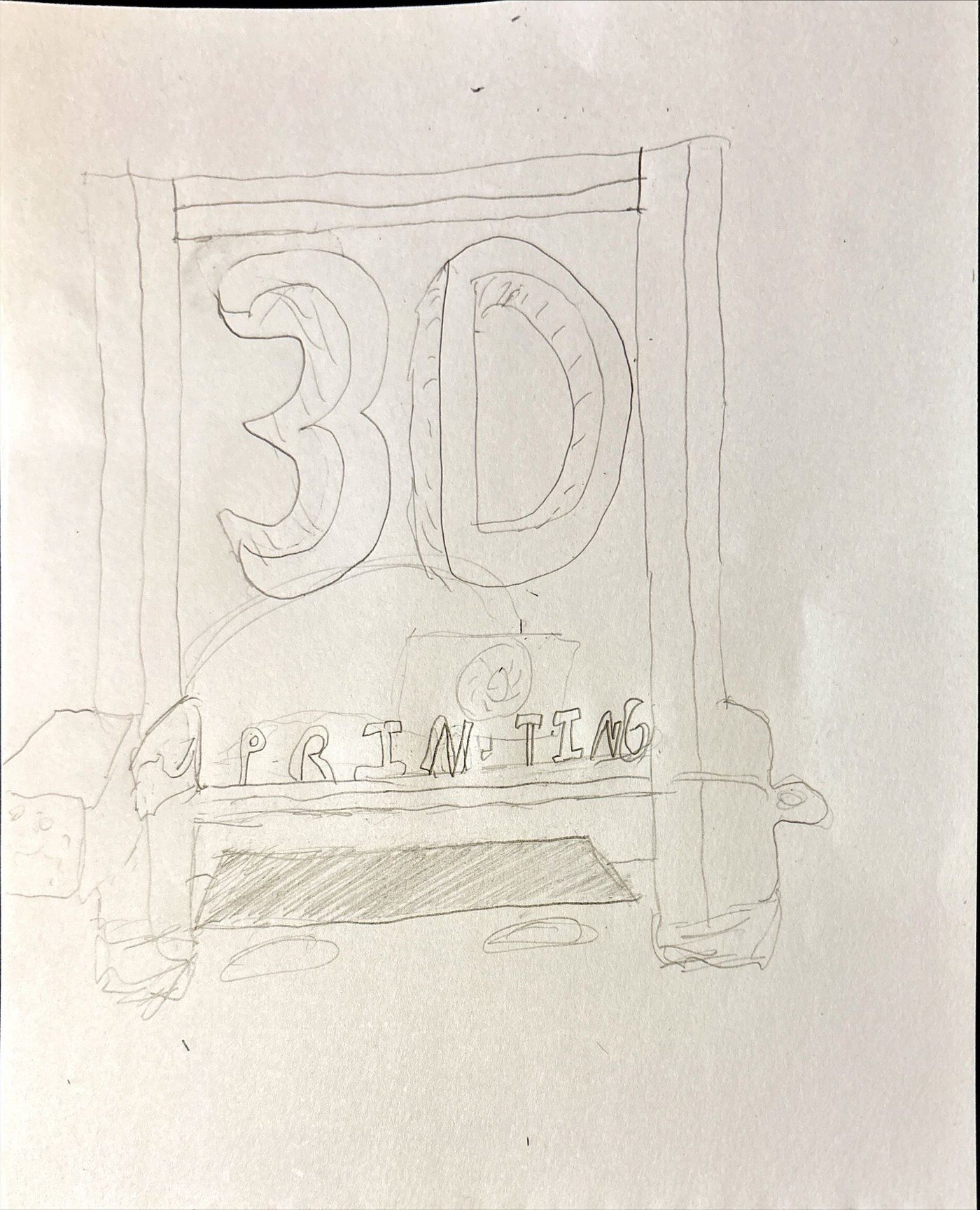
The drafts. Sketches and partial drafts show how someone gets to a layout. My raster type case study (SCF coursework, 2025) includes the pencil layout from pre-project planning, drawn before the type was built.
The Turntable Takeover case study (SCF coursework, 2025) shows the 75% draft I submitted for instructor feedback.
What changed. This shows how a designer takes notes. My examples are class critiques, not client feedback, but they show the detail to look for:
- On a rhino poster built from words, "the rhino was scaled to 90% so the silhouette has room to breathe" after critique, and about 400 more small words close the gaps.
- On a drop cap piece, critique noted that the busy background pulled focus from the letter, so the revision removes it.
- On the Warrell Homes wrap layout, an SCF project, the case study puts the 90% draft shown at critique beside the submitted final. The white headline became a red one in the final, which also has a mint driver-side panel and the layout placed on a measured template. No single note was recorded for this one, so it shows what changed but not why.
A named change with a reason tells you the most, and a before-and-after with no explanation tells you the least.
Are print specs and image credits listed?
If your job is going to print, look for sizes and color settings next to the work. My own entries read like "Poster 11 × 17 in, CMYK (U.S. Web Coated SWOP v2), packaged for print" and "print PDFs with 0.125 in bleed." Those were the specs for those SCF class files. Yours will depend on your printer, so ask whether the designer works from a printer's requirements.
Designers often work with stock photos, templates and licensed art, which is normal. You want to know they track where it came from, because you'll be the one using the result. On my pieces, the credits read "DJ photo: stock image," "Vehicle template: Art Station Vehicle Templates (Toyota Corolla, ©2013)" and "Library background: free-license photo." If you see no credits at all, ask where the photos came from.
Should you ask for free sample work?
No. AIGA, the professional association for design, has a template letter for designers to send to clients who ask. In it, AIGA says it "strongly discourages the practice of requesting that design work be produced" on a speculative basis in order to be considered for a project. Its letter on spec work gives two main reasons. Good design comes from working with you to understand your goals, and a speculative round only gets a surface read of the project. Asking for free work also shows a lack of respect for designers and their time, and it can hurt your own reputation.
AIGA's alternative is simple: ask for examples from previous assignments and a statement of how they'd approach your project, judge those, and then start the chosen designer under contract.
If you're still unsure, pay for one small real job, such as a single flyer. You'll see how the person communicates, handles notes and delivers files.
One distinction that doesn't come from AIGA: an employer's design test for a job application is a different situation from a client asking for free spec work. The Cirque de Paris piece in my portfolio is labeled as exactly that test, so you can read it for what it is.
What should you ask on the first call?
You're checking whether the answers are clear and specific.
- Who does the work? Is it this person, or will it be handed off?
- What do you need from me to quote? A finished design brief will answer most of it.
- How many revision rounds are included, and what counts as one? The guide to giving design feedback explains how to use each round.
- Which files do I get, and who owns the rights? Files and ownership aren't the same thing, as do you own your logo explains.
- When will I see a first draft? Get a date for it as well as for final delivery.
To see these labels in place, browse my work. If you have a project in mind, the graphic designer page covers what I design, and the FAQ covers how a project runs, including my timing, rounds and files.