
Article · Brandon Warrell
How much does flyer design cost? What changes the price, and how to budget
With me, a flyer or poster starts from $75, and the final price depends on size, detail and how many versions you need. You get a fixed quote before any work starts. Published guides run much wider: the two below go from $10 to $999, depending on who does the work and how they charge (checked November 4, 2026). Printing is a separate bill from the print shop.
Why do published price ranges vary so much?
Published guides often measure different things. Here are two, as of November 4, 2026. These are their figures, not mine.
- Don't Do It Yourself (DDIY), "Graphic Design Pricing List (2026)," page metadata dated August 20, 2026: $10 to $100 for a flyer from a freelancer at a fixed price, and $100 to $500 from an agency or subscription.
- Talo, "How Much Does Graphic Design Cost? (2026)," dated April 29, 2024: $75 to $225 for a single-sided page. Its brochure-design page, dated May 2024, lists $15 to $225 for a simple flyer.
The gap comes from a few places:
- The pricing model. DDIY's own page gives several answers for the same flyer: $10 to over $100 at a fixed price, $50 to $135 worked out from an hourly rate, and $199 to $999 on contest platforms, a line the page repeats for other small jobs.
- Location and experience. Talo says hourly rates depend on both, and that rates outside the U.S. can start as low as $5 per hour.
- Who's publishing. These are commercial guides. DDIY promotes monthly design subscriptions, and Talo helps people find pros to hire.
Use these ranges to see how wide the market is. The better comparison is what each quote includes.
What makes a flyer cost more or less to design?
These are common price factors, so raise each one when you ask for a quote.
- Sizes and versions. A letter-size flyer, a half-page handout and a square social post are three layouts. So are versions for different dates or locations.
- One side or two. Talo says a double-sided flyer costs about twice as much as a single-sided one. Other designers may price it differently, so ask.
- Custom illustration or photo editing. Drawing something new or retouching photos adds work that placing a finished image doesn't.
- Who writes the copy. Final text from you is different from asking a designer to write it.
- Timing. Tell the designer about a tight deadline up front. Some charge for rush work, so ask.
- Revision rounds. Check how many are included and what happens after that. Mine include up to 3 rounds, and extra rounds are billed at a small hourly rate, with notice before any extra charge. Designers can count a round differently, so read what counts as one.
The kind of layout matters too. Two of my class posters from SCF (State College of Florida) show the difference. Neither was a paid job, so they show the kind of work involved, not a price.
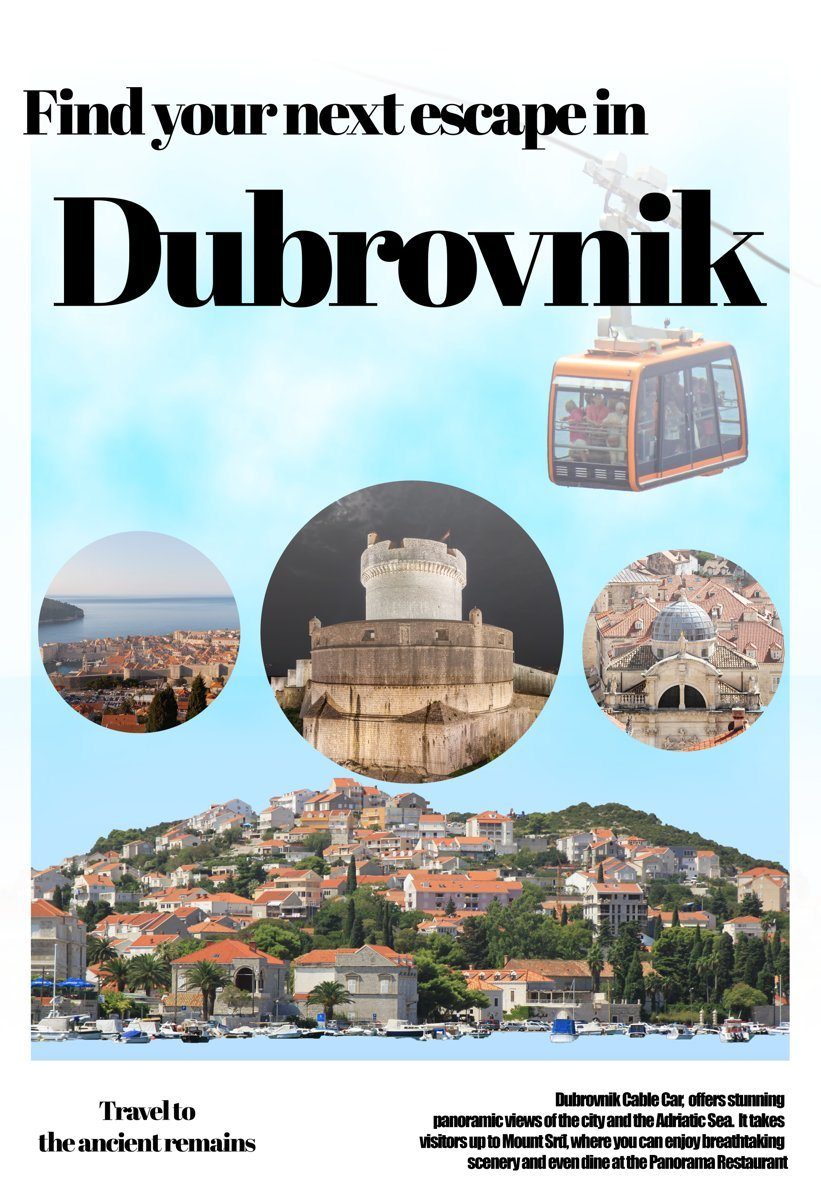
The Dubrovnik travel poster is photo-led. I built it in Photoshop for SCF Communication Design in Spring 2025, with circular photo frames and a cable car, using photos from Wikimedia Commons. A layout like this involves finding, cropping and editing images.
The Habitat for Humanity poster is type-led. For an SCF Typography class, I set words such as Build, Hope, Shelter, Dignity and Community to fill a roof and a three-figure family that echo Habitat's own logo. Here the work is in setting and fitting words. It was a class project, not commissioned by Habitat, and the logo belongs to the organization.

Extra pieces are separate work. For another SCF project, a poster for a fictional DJ night (DJ photo: stock image), I also made a matching animated banner in After Effects. If you want a banner with your flyer, ask for it to be quoted as its own deliverable.
Why are design and printing separate bills?
They're different jobs, usually done by different businesses. Design pays for the layout and the finished files. Printing pays for the paper, ink, number of copies and delivery, and the print shop quotes it. Before you set a total budget, use these questions to ask your printer to compare price breaks, setup and delivery.
For print projects, I deliver a print-ready PDF in CMYK with bleed (and crop marks if your printer asks for them), set up to your printer's specs. The guide to print-ready files explains what that means.
Fixed quote or hourly: which is better for you?
For a single flyer with a clear scope, a fixed quote is usually easier on the client. You know the cost before the work starts and can compare it with other quotes. DDIY's guide says the same: fixed pricing suits clients because it avoids budget surprises, and hourly suits designers because it protects their time.
Hourly billing makes more sense when the work is open-ended. Zarla's pricing guide (updated October 2026), written for designers, suggests per-project pricing for anything you can scope and hourly for work like ongoing edits. If you do pay by the hour, ask for an estimate and a cap.
All my projects get a fixed quote up front, and revision rounds past the 3 included are billed at a small hourly rate. A fixed price covers the scope it describes, so adding sizes or versions later can change it with any designer.
Comparing several designers? See how to choose a graphic designer.
What should a design quote include?
A useful quote answers these questions in writing:
- Scope: What's being made, and who supplies the text and images.
- Sizes and versions: Every size listed, plus any versions.
- Rounds: How many are included, and how extra rounds are billed.
- Files: What you get back, such as a print PDF or PNGs for social, and if editable source files are included.
- Schedule: When the first draft arrives and when final files are due.
- Price: The total, any extras, and what isn't covered. Printing usually isn't.
- Ownership: Who owns what, and when. A list of files doesn't settle this, so read do you own the logo you paid for? before you sign.
For a longer job, the AIGA Standard Form of Agreement for Design Services is a useful reference. It lists a proposal's contents as overview, objectives, process, milestones, fees, expenses, work schedule, billing schedule and signature lines. A one-page flyer doesn't need that much paperwork, but the same questions apply. This is general information, not legal advice.
How can you keep the cost down?
Most of the savings come from what you send before the work starts.
- Send a complete brief. A design brief covers the goal, audience, sizes, deadline and budget, which leads to a more accurate quote.
- Finish the text first. Have your dates, prices and wording checked before design begins. The event flyer checklist shows what to include.
- List every size up front. A designer can plan and price them together.
- Combine your feedback. Have one person collect everyone's changes and send them together, so one set of notes doesn't turn into several rounds.
If you need a flyer or poster, my poster design page shows how I approach this work. The FAQ lists starting prices, what's included and how to ask for a quote.